Expedited removal is the twenty‑first‑century descendant of the Indian Removal Act: a policy engineered for speed, distance, and silence. When a government normalizes exile without a hearing, it is not testing the margins of due process—it is erasing them, and the targets keep expanding until the line between non‑citizen and citizen turns to vapor.
Category: History
Post
Doha to Kabul. How the 2020 U.S.–Taliban Agreement Set the Stage for Afghanistan’s Collapse
The collapse of Afghanistan in August 2021 is often framed as a singular failure of the Biden administration, but the record shows a far more complex lineage. Under the 2020 Doha Agreement, the Trump administration negotiated directly with the Taliban while excluding the Afghan government, committed to a rapid U.S. withdrawal without enforceable conditions, and orchestrated a dramatic reduction in American forces. These decisions—combined with the release of 5,000 Taliban prisoners, the closure of key U.S. airbases, and a refusal to share transition briefings with the incoming administration—left the United States with shrinking leverage and diminished capacity to execute a safe, orderly exit. This feature examines the documented diplomatic, military, and political choices that shaped the withdrawal trajectory, grounding each claim in primary-source evidence from inspector general reports, Pentagon testimony, and contemporaneous news accounts. The result is a clearer view of how policy choices made between 2018 and 2021 directly constrained the final months of the U.S. presence and shaped the outcome on the ground.

Post
How Ruby Bridges Faced America’s Deepest Prejudice
When Ruby Bridges walked into William Frantz Elementary School on a November morning in 1960, escorted by federal marshals, she unknowingly became a symbol of America's battle against racism and segregation. At just six years old, Ruby faced angry crowds, isolation, and hostility simply for going to school. Yet, she persevered, becoming the first Black student at the previously all-white institution. Her courage not only helped dismantle segregation in American education but set her on a lifelong journey of activism, inspiration, and social change. This comprehensive exploration of Ruby Bridges' life delves into her extraordinary childhood, the powerful legal battles that made her integration possible, her quiet years beyond the spotlight, and her ongoing fight against racial injustice. Discover how Ruby’s bravery as a child continues to echo through generations, encouraging us all to confront prejudice with strength and dignity.
Post
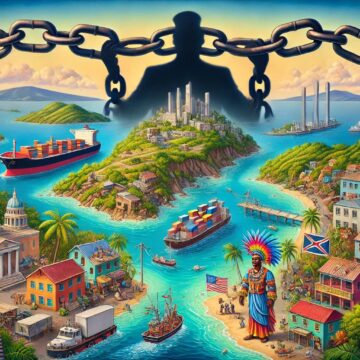
America’s Forgotten Paradise—U.S. Regulations Strangle the Virgin Islands
The United States Virgin Islands are caught in a web of outdated policies, economic strangulation, and political neglect—an American territory in name but not in full privilege. While the mainland thrives, the Virgin Islands are forced to navigate federal regulations that drive up costs, stifle industry, and keep the local economy dependent on tourism. The Jones Act inflates the price of goods, IRS restrictions prevent competitive banking and investment, and limited federal funding leaves infrastructure in decay. Despite being home to U.S. citizens, the Virgin Islands remain voiceless in Congress and powerless in presidential elections. Washington’s policies don’t just overlook these islands—they actively hold them back. It’s time for change, time to break free from the colonial chains, and time to give the Virgin Islands the economic and political autonomy they deserve.

Post
The Tuskegee Experiment Exploited Trust and Rewrote History
The *Tuskegee Syphilis Study* stands as one of the most egregious violations of medical ethics in U.S. history, where 600 African American men in rural Alabama were misled and denied treatment for syphilis over the course of 40 years. Promised free healthcare but instead subjected to deception and exploitation, these men were left untreated even after penicillin became the standard cure. The study’s legacy has left a profound impact on *trust in the medical system*, shaping discussions on *racial injustice*, *bioethics*, and healthcare disparities that continue to resonate today.