For over 130 years, American communities have employed evolving mechanisms to maintain racially segregated neighborhoods—from violent expulsions and municipal ordinances to racially restrictive covenants, federal redlining policies, and today's homeowners association governance. This investigation traces the direct, intentional line connecting sundown towns like Anna, Illinois and Kenilworth's explicit racial exclusions to modern HOA discrimination cases like Providence Village, Texas, where 600 predominantly Black residents faced displacement in 2022. Through comprehensive analysis of historical records, census data, legal cases, and academic research, the evidence reveals that while the vocabulary has changed—from posted signs warning "Don't let the sun go down" to facially neutral rental restrictions and credit requirements—the function remains identical: protecting white-only spaces and perpetuating a $3 trillion racial wealth gap rooted in government-sponsored housing discrimination.
Tag: Systemic Racism
Selective Outrage: What the George Floyd Mockery and Charlie Kirk Martyrdom Reveal About Race, Power, and American Empathy
When Charlie Kirk was killed in September 2025, a coordinated campaign backed by government officials led to over 150 people being targeted for termination within nine days—some fired within hours for merely quoting Kirk's own words. Five years earlier, when George Floyd was killed by police, his death became fodder for Halloween costumes, TikTok reenactments, and memes that circulated widely with scattered, inconsistent consequences. This investigation documents the stark disparity in institutional response: who receives martyrdom versus mockery, whose dignity merits protection, and how systemic racism operates through selective empathy. Drawing on court documents, employment records, and government statements, the article reveals how power—not principle—determines whose death America mourns and whose it tolerates as entertainment.

The Tuskegee Experiment Exploited Trust and Rewrote History
The *Tuskegee Syphilis Study* stands as one of the most egregious violations of medical ethics in U.S. history, where 600 African American men in rural Alabama were misled and denied treatment for syphilis over the course of 40 years. Promised free healthcare but instead subjected to deception and exploitation, these men were left untreated even after penicillin became the standard cure. The study’s legacy has left a profound impact on *trust in the medical system*, shaping discussions on *racial injustice*, *bioethics*, and healthcare disparities that continue to resonate today.
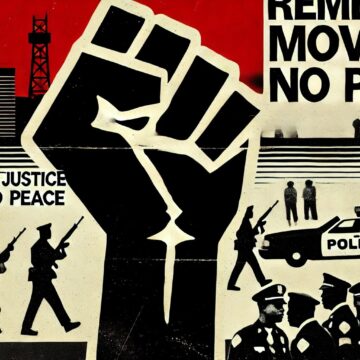
The 1985 MOVE Bombing: An Examination of State Violence, Race, and Urban Life in America
The 1985 MOVE bombing in Philadelphia stands as a stark example of the intersection between race, state violence, and urban policy in the United States. When the city dropped a military-grade bomb on the home of the Black liberation group MOVE, killing 11 people, including five children, and destroying 61 homes, it revealed the devastating consequences of police militarization and systemic racism. This event, which still resonates in the era of Black Lives Matter, highlights the ongoing struggles for police reform, racial justice, and governmental accountability in marginalized communities.

Shedding Light on the Past: North Carolina’s Eugenics Program and the Fight for Justice
"They cut me open like I was a hog." These harrowing words from Elaine Riddick, a survivor of North Carolina's eugenics program, lay bare the brutal reality faced by thousands of women who were forcibly sterilized under the guise of public health. Stripped of their reproductive rights without consent or understanding, these women became victims of a state-driven agenda aimed at controlling who was deemed "fit" to bear children. This article uncovers the hidden truths of North Carolina's dark past, revealing a legacy of systemic abuse and injustice that reverberates into the present, demanding acknowledgment and action from a new generation.