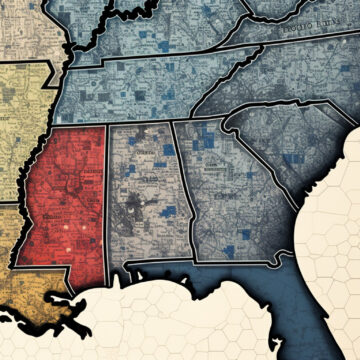
While the concept of electoral districts might seem straightforward, the processes that determine their shapes and sizes—redistricting and gerrymandering—reveal a more convoluted narrative. As we delve into the distinctions and implications of these processes, we will uncover the nuanced ways in which the mere drawing of lines on a map can serve as a powerful tool, sometimes used to uphold democratic ideals and sometimes to distort them. The contours of these boundaries, quite literally, shape the contours of power and representation in our democracy.
Category: Capitalism
Re-evaluation of Freedom: A Historical Study of Systemic Injustices in America from Colonization to the 21st Century
Upon closer scrutiny of the American Dream, it becomes evident that while inspiring, has often failed to align with the historical realities experienced by many individuals who call America home. While the dream promotes the belief that America is a land of equal opportunity, the experiences of marginalized communities tell a different story. From the onset of colonization, through the periods of slavery and systemic racism, to the present-day struggles of various minority groups, the nation's history is riddled with contradictions to this quintessential American ideal.
The 1943 Lanham Act Childcare Program Exposed Congressional Neglect—Its Demise Still Haunts America
Amidst the tumult of World War II, the United States briefly achieved something that remains elusive today: truly universal childcare. Under the Lanham Act of 1943, the federal government funded “war nurseries,” enrolling an estimated 550,000 children so their mothers could bolster the wartime workforce. Though wildly successful, these centers vanished soon after the conflict ended—victims of shifting politics and deep-rooted biases. This forgotten chapter of American history reveals how effectively the nation can rally behind working parents, and how readily it can abandon them once the crisis subsides.
Examining Gun Culture, Paranoia, and Division in the United States
American society, celebrated for its diversity and innovation, is paradoxically plagued by an enduring problem: a deeply entrenched culture of gun ownership and violence. The right to bear arms, enshrined in the Second Amendment of the Constitution, is as fiercely defended by many Americans as it is ardently contested by others. This polarization extends beyond constitutional interpretation to encapsulate the very values, fears, and aspirations of a nation.
Capitalist Evangelicalism: Faith, Power, and Misused Monies
Capitalist Evangelicalism, at its core, combines the fervent religious convictions of evangelical Christianity with the principles of unregulated capitalism. This marriage of faith and economics is not new, but its recent surge and consequential impact on society are worth an in-depth analysis. As faith becomes entwined with the economic system, the potential for manipulation increases dramatically, manifesting in forms as varied as public policy influence to exploitation of the faithful's goodwill.