When James Comey prosecuted Martha Stewart in 2003 using what legal scholars called an "audacious legal theory," and when he made unprecedented public interventions in the Hillary Clinton email investigation in 2016, he claimed to be upholding institutional integrity. But a comprehensive examination of court records, Inspector General reports, and expert analysis reveals a troubling pattern: Comey's most aggressive and procedurally irregular actions have disproportionately targeted high-profile women, generating enormous reputational damage regardless of legal outcomes. From the novel securities fraud charge against Stewart—later dismissed by a judge—to the "extraordinary and insubordinate" press conferences and letters about Clinton that violated Justice Department norms, Comey's decisions in these cases drew sustained criticism from legal experts across the political spectrum. The Department of Justice Inspector General found that Comey's handling of the Clinton investigation included "inappropriate commentary about uncharged conduct" and represented departures from "well-established department policies" for which he offered no "persuasive basis." This investigation examines whether Comey's most controversial prosecutorial decisions reveal a pattern of disproportionate intensity, extraordinary publicity, and institutional norm violations that consistently affected prominent women—raising fundamental questions about equality before the law and the appropriate use of prosecutorial discretion.
Category: Presidency
Trump’s 2025 Deportation Architecture and the Unlearned Lesson of the Removal Act
Expedited removal is the twenty‑first‑century descendant of the Indian Removal Act: a policy engineered for speed, distance, and silence. When a government normalizes exile without a hearing, it is not testing the margins of due process—it is erasing them, and the targets keep expanding until the line between non‑citizen and citizen turns to vapor.
Doha to Kabul. How the 2020 U.S.–Taliban Agreement Set the Stage for Afghanistan’s Collapse
The collapse of Afghanistan in August 2021 is often framed as a singular failure of the Biden administration, but the record shows a far more complex lineage. Under the 2020 Doha Agreement, the Trump administration negotiated directly with the Taliban while excluding the Afghan government, committed to a rapid U.S. withdrawal without enforceable conditions, and orchestrated a dramatic reduction in American forces. These decisions—combined with the release of 5,000 Taliban prisoners, the closure of key U.S. airbases, and a refusal to share transition briefings with the incoming administration—left the United States with shrinking leverage and diminished capacity to execute a safe, orderly exit. This feature examines the documented diplomatic, military, and political choices that shaped the withdrawal trajectory, grounding each claim in primary-source evidence from inspector general reports, Pentagon testimony, and contemporaneous news accounts. The result is a clearer view of how policy choices made between 2018 and 2021 directly constrained the final months of the U.S. presence and shaped the outcome on the ground.
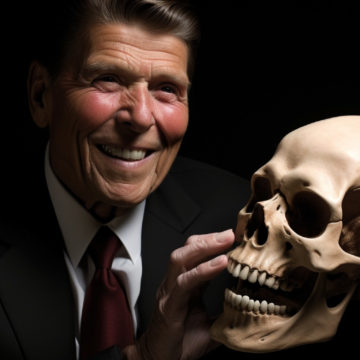
Reagan’s Legacy: Catalyst for the Modern Downfall of America
The handling of crucial matters such as the AIDS epidemic, criminalization of homosexuality, arms deals, and mental health policy, further compound the complex legacy left by his presidency. The objective of this work is not to vilify Reagan, but rather to critically analyze the long-term effects of his policies and actions, fostering an understanding of how they continue to impact our socio-economic and political landscape to this day.