When Charlie Kirk was killed in September 2025, a coordinated campaign backed by government officials led to over 150 people being targeted for termination within nine days—some fired within hours for merely quoting Kirk's own words. Five years earlier, when George Floyd was killed by police, his death became fodder for Halloween costumes, TikTok reenactments, and memes that circulated widely with scattered, inconsistent consequences. This investigation documents the stark disparity in institutional response: who receives martyrdom versus mockery, whose dignity merits protection, and how systemic racism operates through selective empathy. Drawing on court documents, employment records, and government statements, the article reveals how power—not principle—determines whose death America mourns and whose it tolerates as entertainment.
Tag: racial justice
From Robert Charles to ICE: Echoes of State Violence and Resistance in America
The summer heat bore down on New Orleans that July night in 1900 when gunfire first cracked the air. Robert Charles, a Black laborer who had dared to sit on a porch in a white neighborhood, would be dead within four days—his body riddled with bullets, then mutilated by a mob drunk on the kind of rage that newspapers cultivated and police sanctioned. Before he fell, Charles killed several officers in what he surely understood would be his final stand. The city erupted. White mobs roamed the streets hunting Black residents. At least 28 people died, most of them Black civilians guilty of nothing more than existing in the wrong place during a wave of sanctioned terror. The rhetoric that summer was familiar: dangerous criminals, threats to public safety, the necessity of force. Charles was not portrayed as a man defending himself against a violent arrest in a society that offered him no legal protection. He was a monster to be exterminated, and the Black community that harbored him deserved collective punishment. More than a century later, the same language of fear and control echoes through the detention centers and deportation raids of today.
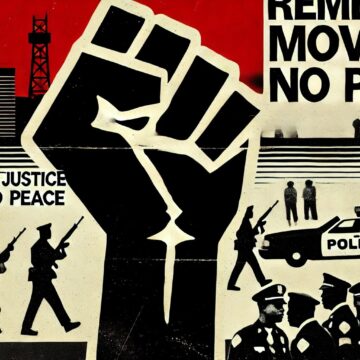
The 1985 MOVE Bombing: An Examination of State Violence, Race, and Urban Life in America
The 1985 MOVE bombing in Philadelphia stands as a stark example of the intersection between race, state violence, and urban policy in the United States. When the city dropped a military-grade bomb on the home of the Black liberation group MOVE, killing 11 people, including five children, and destroying 61 homes, it revealed the devastating consequences of police militarization and systemic racism. This event, which still resonates in the era of Black Lives Matter, highlights the ongoing struggles for police reform, racial justice, and governmental accountability in marginalized communities.
How Excited Delirium Became a Cover for Police Violence
In the annals of modern policing, there’s a term that flares up in the headlines when a routine arrest turns fatal, when bodycam footage sparks protests, or when another Black or brown body ends up lifeless on the asphalt. That term is excited delirium—a medical-sounding phrase with a murky past and a troubling present, one that has become a catch-all explanation for deaths that occur under aggressive police restraint.